Kamis, 04 Oktober 2012

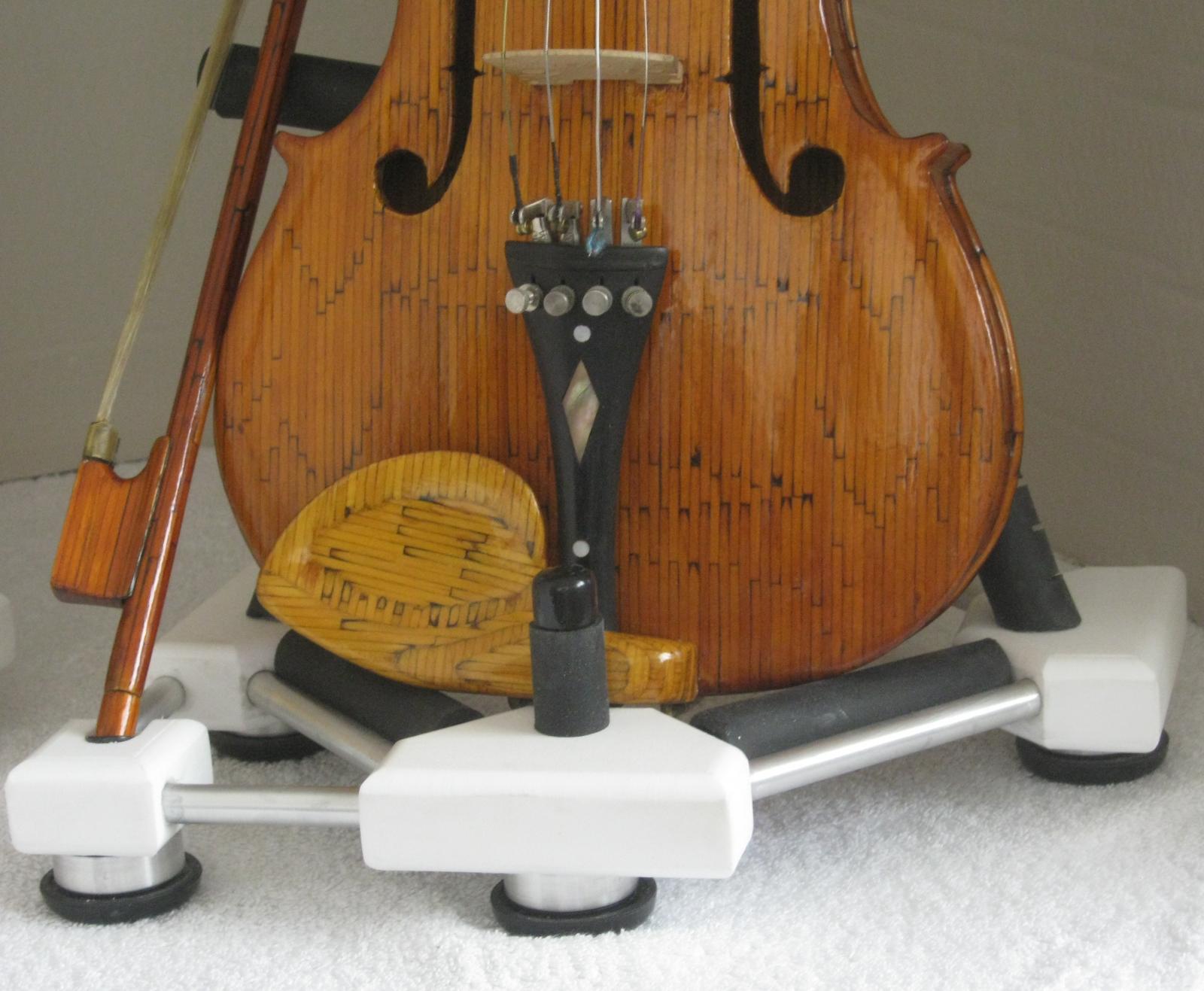
Matchstickology - Jack Hall's Matchstick Guitar

Jack Hall the Matchstick Man
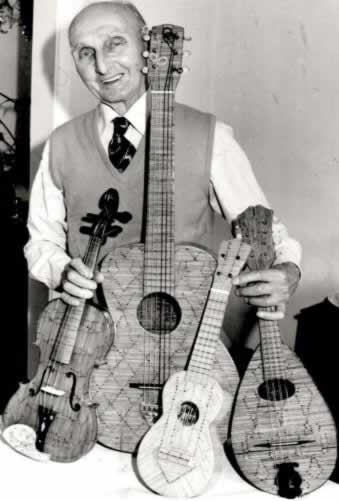
A special thanks to reader Tony Hall for sending me this wonderful story about his father, Jack Hall and the amazing musical instruments Mr. Hall created using only a knife, an extremely sharp razor, a bit of glue and thousands and thousands of burnt matches.


Tony Hall
This is a most unique guitar story. I am gratifed that Tony Hall gave me permission to use pictures and information about of his father's extraordiany collection.

Jack Hall was born in 1906 in Brighton, England. He never had any musical talent, but as a seaman in the Merchant Navy, he had a lot of time.

Jack started serving on an American tramp stearmer, the Eastwick, which was owned by the Anglo-American Company, a subsidiary of Standard Oil.


The daily routine was monotonous, so to quell the boredom Jack needed to find something to do with the time.

He began by picking up discarded matchsticks from the ships deck that were routinely tossed away by his fellow crew members. He got the notion to glue them together an make something.


Using an empty tobacco tin and an old saucepan he made a glue pot and attempted to piece together matches to create a layer of timber. His first attempt was unsuccessful. Undetered, he tried again, this time using a second layer crosswise, in effect making a two ply board of matchsticks.

A crew member jokingly suggested he make something useful, like a fiddle. Somehow one of those "ah-ha" moments went of in Mr. Hall's mind. He was on to something. He began askng all of his friends to not throw away their used matches, but to send them to him. Friends and family would mail them to him and when he arrived in port he always received letters containing used matches.


Hall had no carpentry or luthery skills.

Whenever his ship was in port he would go ashore to pawnshops to exam musical instruments and study the measurement, shape and feel of a fiddle. Onboard ship, he transferred these to pencil sketches, determined to make a fiddle out of glue and matchsticks.

His task took five hours a day over a six month period. Hall used more than 18,000 matchsticks and aproximately 3 pounds of glue. He eventually whittled matchsticks down to around 14.000 and used another 1,000 for the chin rest. Please consider, this was no easy task to do aboard a small tramp steamer, with the crowd of shipmates and the rolling of the waves.

Match Stick Fiddle and Match Stick Bow
Jack completed his fiddle in 1936 and went into the mess room to belt out a few notes for his amazed mates. Between 1936 and 1939, Hall had created a Neopolitan (bowl-back) mandolin, an acoustic guitar, a larger 12 sided mandolin and a tenor banjo.

Perhaps the most difficult process presented to him was how to make curved surfaces.

He soaked matchsticks in water until they softened and became plyable. Once glued together Hall used flat irons, firebrcks and pans of water to aid in shaping the sticks. He had no idea that professional luthiers utilized the same process to bend wood.

Jack Hall states, " Carving was done with a knife, a file, and a cut-throat razor; finishing touches were accomplished with sandpaper, before the varnish seal was applied."

Perhaps the most striking (I made a pun..it's matches folks) feature of Mr. Hall's work is the beautiful designs derived from his placement of the sets match sticks. Each had to be cut down individually to varied lengths to fit into what seems to be a puzzle as much as a guitar.


Tony Hall with Dad's Collection
Apart from the amazing guitar, violin, banjo, and mandolins, one of the other extraordinary features are the cases that Mr. Hall built by utilizing the matchboxes. He stated that he regreted painting the outside of the case black because this did hide some of the artwork.

Opening the cases reveals the extrordiary graphics, art and logos manufacturers used to sell their products during the 1930's and 1940's.

In the 1940's, the breakout of WWII interrupted Jack Hall's "Matchstickology" as he volunteered to serve aboard a deep sea rescue tug boat. After his discharge from the services in 1945, Mr. Hall quietly gave up is hobby and stored his treasures away in the attic of his home until 1951 when it was put on display at the Festival of Great Britain.

In 1976 a Radio Brighton reporter did a story on Jack Hall and visited his home to see the instruments for himself.

In 1984, Mr. Hall revived interest in his hobby by building a ukulele out of 10,000 matches.

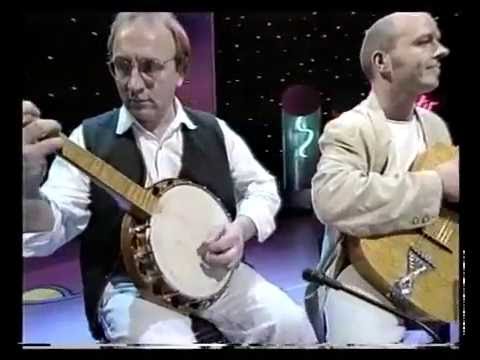
It was not until 1991 when a group of four musicians played Jack's instruments on BBC Television, astonishing viewers and the musicians.

Jack Hall passed away at age 86. He had no idea of the sensation his collection had created. The instruments have been loaned out for various displays and even more Television shows. Notable players, such as world renown concert violinist Yehudi Menuhin, guitarist and singer Glen Campbell and guitarist Albert Lee have all played Mr. Hall's instruments.

Jack Hall was a most extaordinary and unique fellow.
http://www.flickr.com/photos/52858221@N04/page3/



Minggu, 09 September 2012

John Lennon's Les Paul Junior modified guitar.


PBS Television recently ran a feature on The Mike Douglas Show. This daytime talk show originated out of Philadelphia and ran for many years. 

What was unique about The Mike Douglas Show, was Mr. Douglas’ attitude and recognition of talented people. During the late 1960’s and early 1970’s his guest list included, not just current celebrities and pop musicians of the past, but rock musicians and radical icons that you would never see on The Johnny Carson Show. 


For an entire week, he turned his show over to John Lennon and Yoko Ono. John and Yoko had free reign to choose the guests they wanted to interview. 


Les Paul Jr with Sunburst Finish


During that week, Lennon played with some other musical guests and the guitar he chose was one that I had never seen before watching the video of him playing alongside Chuck Berry.


Many of us recall John and George playing their matching Gibson J-160E guitars on the Ed Sullivan Show or in their first movie. Later on John stripped the finish off of his guitar and played it during the Bed-in.


Few recall John Lennon’s Gibson Les Paul Jr. guitar. This is the guitar Lennon used during his 1972 performance at Madison Square Garden to benefit the One to One Organization, which aided children with learning disabilities.


John Lennon purchased a factory condition Les Paul Junior guitar with a tobacco sunburst finish sometime in the early 1970’s. The original equipment was a single P-90 pickup with a black cover, a wraparound tailpiece and Kluson tuners.

The scratch plate covered the section below the neck. The controls were sparse, just a volume and tone control with gold knobs.


Lennon took his Les Paul to New York luthier Ron DeMarino to be modified. Lennon suggested that he would like DeMarino to install a humberdinker" pickup and described the sound he was seeking from this little guitar. Lennon thought of himself as a rhythm guitar player. In his own words he was a “rhythmer.”

DeMarino left the P-90 alone, but routed out a section of the body for a neck pickup. Instead of the requested Humbucker, DeMarino installed a Charlie Christian pickup, which had a narrow string-sensing blade and produced a clear sound. 

Lennon was quite happy with the results. You can see him playing the finished product in the video clip during the “Douglas” show.   


At some point shortly afterward, he returned the instrument to DeMarino and asked him to sand off the sunburst finish.  In the past Lennon sanded the finish off of his Gibson J-160E and his Epiphone Casino, so it was no surprise he wanted this guitar sanded to show off the instruments bare mahogany wood finish. It was at this time Lennon asked DeMarino to replace the original tailpiece. 

DeMarino plugged the holes from the wrap-around bridge and added a tune-o-matic bridge and stop tailpiece.


Fast forward 35 years after the August 30th 1972 concert in Madison Square Gardens that was to be Lennon’s first performance in years.  In July of 2007 Gibson Guitars reproduced a limited run of 300 John Lennon Les Paul Junior guitars for sale on August 17th 2007. 


This project was lead by Gibson’s Customer Historic Program manager, Edwin Wilson.

Wilson obtained Yoko Ono’s permission and endorsement of the project.  Mr. Wilson then visited The John Lennon Museum in Japan, where the original instrument is currently on display. 


Wilson was allowed to inspect the guitar but was required to wear white protective cotton gloves. As the museums curator laid it out, Wilson began by taking pictures and measuring the instrument. He was not allowed to loosen the strings. He was able to remove the back access plates to photograph and inspect the wiring and the toggle switch. He was also able to remove the rear pickup covers so Custom Shop designers could accurately reproduce the wiring.


The thing that most impressed Wilson was the frets. For an instrument that was almost 40 years old the frets were in great shape. Pre-1957 Gibson guitars came with extremely thin frets. For those that had a heavy fretting hand or those lead players that did a lot of string bends, the narrow frets would show a lot of wear. Wilson concluded that Lennon had a very light touch on his fretting hand.


The other aspect that was evident was Lennon’s use of extra light gauge strings. John used .009’s.

The Gibson reproduction guitars included two factors different from Lennon’s original model. The new instruments were equipped with wider frets and .010 gauge strings.

Gibson luthiers distressed this instrument, even using cigarette burns, to mimic Lennon's original model.


After Lennon’s original 1972 Madison Square Garden appearance, John decided to have the guitar refinished with a cherry stain while maintaining the sanded down finish. The Gibson reproduction features this finish and in addition, aged chrome hardware.

The original purchasers of this instrument were offered a certificate of authenticity packaged in a green cloth folder that was embroidered with Lennon’s signature, plus and interview with luthier Ron DeMarino, a Lennon print signed by the artist, Allison Lefcort and a replica of Lennon’s New York City sleeveless t-shirt.


The original suggested Gibson retail price for the guitar was $7527.00 USD.


Selasa, 28 Agustus 2012

The Latest Unique Guitars and a Few Oldies, But Goodies

Unique guitars. That’s my story and I’m sticking to it! The following instruments are among some of the newest offerings by some well known and not so well known guitar manufacturers. Just for fun, I’ve thrown in a couple “oldies, but goodies” from Gibson’s What Were We Thinking About Department. Enjoy!

Mr. Hartley Peavey’s company has created a new series of guitars that are aimed at the youth market. So Daisy Rock and Squier Hello Kitty, move over, because Peavey has now come out with the Super Heroes of Marvel Universe series of guitars. If not a hit with your kiddos, these may be a hit at Comic Con.

All of the guitars are licensed through Marvel and feature, Captain America, Wolverine, X-Men, Spider Man, Iron Man, The Incredible Hulk and Thor.


(I guarantee your fingers will be Mighty Thor if you string these with heavy gauge Black Diamonds.) All instruments come with detailed artwork on the guitars body from the artists at Marvel Comics.

The Marvel electric guitars in the series are ¾ sized, except for the full-sized Rockmaster. The acoustic Marvel character guitars are ½ sized. The series also includes guitar picks and straps adorned with Marvel characters.

Robert Godin of his namesake company has come up with a couple of off-the-wall 5th Avenue guitars archtop guitars for the recent NAMM convention. These instruments were hand painted by artist Joseph Arthur.

For those unfamiliar with Arthur, he is a singer/songwriter and hails from Akron, Ohio. He was discovered by Peter Gabriel. Arthur is well known for his poetic lyrics and sonic palette. He is also an acclaimed painter. .

A Hawaiian company called Mahalo has come up with a trio of unique instruments, two of which resemble Hallmark guitars and one is reminiscent of a Mosrite creation. The Hallmark style instruments are both ukuleles. The larger surfboard shaped instrument is a six string steel guitar.

If you looked closely in the Godin article, there was a video link to the Godin Multi-oud. For the unfamiliar, the Oud (pronounced Ooood) is an ancient lute shaped fretless instrument that has been used for centuries to play Middle Eastern music.

The instrument has eleven strings and is played with a stiff plectrum. Most Oud players do not play chords; rather they play single note melodies and counter melodies.


The Oud has a very unique sound and has been incorporated in some traditional music.

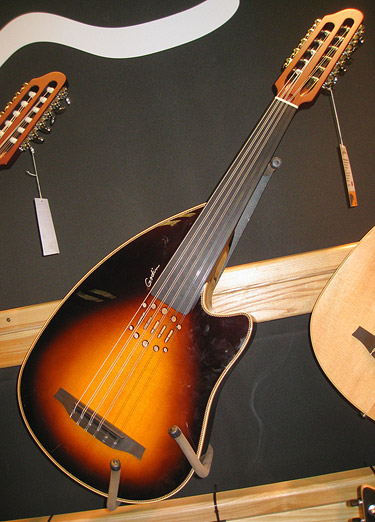
Godin has designed this as an electric model that has an advantageous cutaway, to extend the instruments range. It can be played acoustically or played through an amplifier. The Multi-oud has built in microphones and piezo electric pickups.

A company called Moses has created this year’s answer to the Dan Armstrong Lucite guitar. Moses is well known for their carbon graphite guitar and bass necks.
A company from Belgium has come up with an instrument that is much like The Stick. For the unfamiliar, The Stick is strapped onto the player so that both arms are free and is played by tapping the strings.


The Kelstone is played in a similar manner, the difference is this instrument is played flat and supported by a stand.

Does anyone remember that in the late 1990’s Gibson’s own design team decided what the world needed was a Dale Earnhardt Les Paul guitar. Now I consider NASCAR is a great sport, but I have no idea how Dale Earnhardt and Les Paul got together in the minds of Gibson designers.

Gibson built a limited run of 333 of these instruments. I have yet to see anyone play one.


In another move that left me scratching my head, Gibson designers decided to produce a Les Paul Jr. style guitar under their Epiphone brand that had licensed USA University Team logos on the body and headstock.

Epiphone Collegiate Series
This was at a time when players desired to purchase Les Paul Flame tops. As you can imagine, the Collegiate Les Paul line was not a success. There used to be a music store called Shreve Audio that advertised in Vintage Guitar Magazine. Within a year of offering the University Logo Les Paul’s Shreve had a close-out on these for $99 each.


ESP offers this Kirk Hammett KH-2 model. I understand you can not only play Thrash Metal on it, but you can also ask the spirit world what Dave Mustaine is up to these days.


Rabu, 15 Agustus 2012

Godin Guitars - Factory Tour

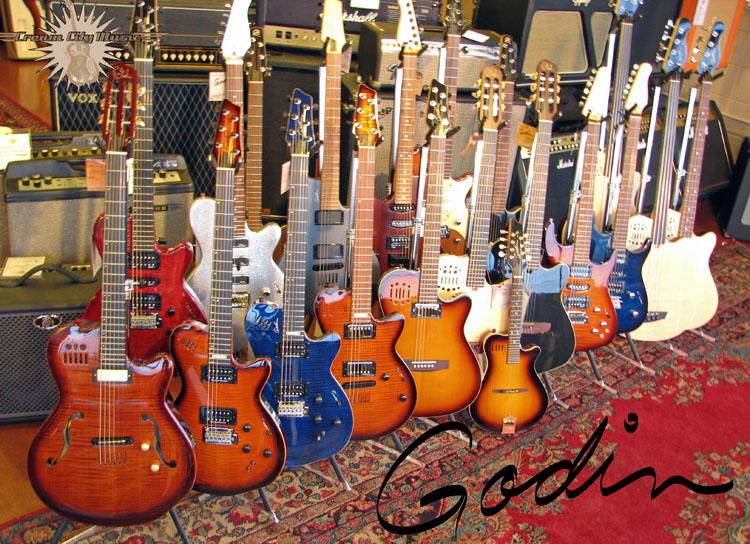
I am a big fan of Godin guitars. In my opinion they are well made and sensibly priced guitars.

M. Robert Godin
(Ro-bere Go-dey[n]) got started by building the guitars and then driving in his station wagon to sell his instruments directly to dealers.


Godin has a created a great variety of brands to choose from for novices to professionals. Here is a listing of the companies brand names:

Arts & Lutherie Ami


Arts and Lutherie makes a great beginner guitar.


Seagull guitars are moderately priced and are excellent instruments for beginners or professionals.


Simon and Patrick (named for his sons) are excellent instruments, perhaps a step above Seagull.


Godin recently started an electric guitar line called Richmond, which is named for a town where Godin has a factory.


Godin brand guitars are professional quality.

A few years back Mr. Godin got the notion to produce an archtop guitar that was similar to those he saw as a young boy. The result was the Godin 5th Avenue. This model went from a non-cutaway laminated archtop instrument, similar to the Kays, Harmonys and Gibsons that could be found in any pawnshop, to a modern Jazz archtop in the style of the Gibson ES-175.

Some lessor know Godin brands include Norman and LaPatrie guitars.

By the way, the town of LaPatrie is home to one of the Godin factories.

LaPatrie is located in Quebec Provence. All guitars are built in Canada and are beauts, eh?

Recently Robert Godin has created a line of amplifiers, made in Italy with the brand name SR. These are great for Jazz and electrified Acoustic guitars or can be used as a miniature P.A.

Godin has also created some unusual instruments. This would include the latest instrument called The Merlin. It is played like a fretted dulcimer.

This youtube video is a tour of the Godin factory. Check it out and you will see the quality that goes into each guitar.